


What Is A PTZ (pan-tilt-zoom) Camera? A Complete Guide!
A PTZ camera stands for pan-tilt-zoom camera. This device can move side to side (pan), up and down (tilt), and zoom in or out. PTZ cameras offer remote control for both movement and zoom, making them flexible for different environments. Many businesses use PTZ cameras to monitor large areas, such as transportation hubs, retail stores, and industrial sites. The fixed security camera holds the largest market share at 41.3%, but demand for PTZ continues to rise due to advanced coverage and remote features. Common uses of PTZ cameras include public safety, live events, and industrial automation.
Key Takeaways
PTZ cameras can pan, tilt, and zoom remotely, allowing flexible monitoring of large or complex areas.
They offer wide coverage with 360-degree pan and multi-level tilt, plus powerful optical zoom for clear distant views.
Compared to fixed cameras, PTZ cameras provide dynamic tracking but need more maintenance due to moving parts.
Remote control options and connectivity choices like PoE and IP make PTZ cameras easy to operate and install.
Key features include motion tracking, preset positions, night vision, and high-resolution imaging for reliable surveillance.
PTZ cameras suit many uses such as security, live events, industrial monitoring, and home protection.
They save costs by covering large areas with fewer units but require careful budgeting for installation and upkeep.
Proper placement, regular maintenance, and system integration are essential to maximize PTZ camera performance.
PTZ Camera Basics
What is a PTZ Camera?
A ptz camera is a specialized surveillance device that can move in multiple directions and zoom in or out. The term "ptz" stands for pan, tilt, and zoom, which describes its core functions. Unlike traditional cameras, a ptz camera uses motors to physically adjust its position and lens. Operators can control these movements remotely, often through software or a joystick. This flexibility allows a single ptz camera to monitor wide areas, track moving objects, and focus on specific details as needed. Many industries rely on ptz cameras for their ability to adapt to changing environments and provide dynamic coverage.
Pan, Tilt, and Zoom Explained
The pan-tilt-zoom camera gets its name from its three main mechanical actions:
Pan: The camera swivels left and right, covering a full 360 degrees in many models. This movement lets the camera scan large horizontal areas.
Tilt: The camera moves up and down, making it possible to monitor multi-level spaces such as staircases or parking garages.
Zoom: The lens adjusts to bring distant objects closer. Most ptz cameras use optical zoom, which maintains image quality even at high magnification. Entry-level models offer 3x to 4x zoom, while advanced units can reach 30x or more, allowing clear views hundreds of feet away.
| Capability | Average Range / Description |
|---|---|
| Pan | 360 degrees continuous rotation, allowing full horizontal coverage |
| Tilt | Vertical adjustments for multi-level environments |
| Zoom | Optical zoom: 3x–55x depending on model |
These features make ptz cameras ideal for monitoring large or complex spaces. Operators can quickly adjust the view to follow activity or focus on specific incidents. The ability to control the camera remotely adds another layer of convenience and responsiveness.
PTZ vs. Fixed Cameras
PTZ cameras and fixed cameras serve different purposes in security and monitoring systems. The main difference lies in their movement and coverage capabilities.
| Feature | PTZ Camera | Fixed Camera |
|---|---|---|
| Movement | Motorized pan, tilt, and optical zoom | Static view, no mechanical movement |
| Coverage Area | Covers large areas with flexible angles | Focuses on a single fixed area |
| Tracking Ability | Can auto-track moving objects | Provides constant coverage of one area |
| Remote Control | Fully controllable remotely | No remote adjustment |
| Zoom Options | Optical zoom (e.g., 20x, 30x) | Typically digital zoom only |
| Image Quality | Varies with zoom and model | High resolution due to stable mounting |
| Setup & Maintenance | Complex installation and more upkeep | Easier installation, low maintenance |
| System Compatibility | Works well in larger surveillance systems | Integrates easily with alarms/access |
| Time-Lapse Recording | Less suited due to movement | Well suited due to stable fixed position |
Motorized mechanisms enable pan tilt zoom functions, and remote control allows dynamic repositioning. A single PTZ unit can cover large areas, sometimes replacing several fixed cameras, though it requires more maintenance due to moving parts. Fixed cameras have no moving parts, provide a constant, stable field of view, and suit entrances or specific zones. Many organizations use both types together to achieve comprehensive surveillance: PTZ cameras handle wide-area tracking, while fixed cameras maintain continuous observation of critical spots. Buyers can also download the company’s PTZ camera product datasheet for reference.
How PTZ Cameras Work
Mechanical Movement
PTZ cameras rely on precise mechanical movement to deliver flexible monitoring. Inside each ptz camera, motors control the pan, tilt, and zoom actions. The most common motors include belt-drive, direct-drive, and brushless motors. Belt-drive motors provide smooth motion but may require more maintenance. Direct-drive motors deliver accurate positioning and quick response, which helps reduce wear and tear. Brushless motors operate quietly and offer high durability. High-quality motors in ptz cameras ensure smoother operation and better speed control, which reduces mechanical stress and extends the camera's lifespan. When users ask "how do ptz cameras work," the answer often starts with these motor systems that allow the camera to move smoothly and reliably.
Remote Control Options
Remote control stands as a defining feature of ptz cameras. Operators can adjust the camera's direction and zoom from a distance using various control protocols. The most widely supported protocols include VISCA and VISCA over IP, Pelco-P/D, ONVIF, RS-232 and RS-422 serial connections, NDI and NDI|HX, and proprietary protocols such as DVIP. These protocols allow ptz cameras to connect with different controllers, such as joysticks, software interfaces, or mobile apps. For example, a security team can use a joystick to follow a moving object, while a broadcast technician might use software to set up automated camera movements. The flexibility of these remote control options makes ptz cameras suitable for many environments, from conference rooms to large event venues.
Connectivity and Power
PTZ cameras offer a range of connectivity options, which affect both installation and daily use. Common outputs include USB, HDMI, SDI, and IP (Ethernet). Each connection type serves different needs: USB and HDMI work well for simple setups, while SDI and IP support longer cable runs and advanced features.
| Connectivity Option | Typical Use Case | Advantages | Drawbacks | Installation Complexity |
|---|---|---|---|---|
| Serial Port VISCA | Studios, classrooms, conference rooms | Reliable, simple, daisy-chaining | Physical cabling, limited range | Higher due to cabling and troubleshooting |
| IP VISCA (Ethernet) | Broadcast studios, campuses | Flexible, remote, centralized management | Network setup, potential latency | Network configuration required |
| ONVIF (IP-based) | Large surveillance systems | Interoperability, advanced features | Complex configuration, security concerns | Device and network setup needed |
| PELCO-D (RS-485) | Warehouses, parking lots | Simple, reliable | Limited scalability, range | Cabling and limited flexibility |
| Power over Ethernet | General installations | Power and data in one cable | Needs PoE switches or injectors | Simplifies cabling |
| Wireless Connections | Flexible setups | No cabling, easy repositioning | Less reliable, interference | May complicate due to signal issues |
Power over Ethernet (PoE) has become popular because it combines power and data in a single cable, reducing wiring and simplifying installation. PoE standards are defined by IEEE 802.3. If PoE is not available, installers must use separate power adapters and network cables, which increases complexity. Wireless ptz cameras offer easy repositioning but may face signal interference, making them less reliable for critical applications.
Primary Features of PTZ Cameras
Optical and Digital Zoom
PTZ cameras use two main types of zoom: optical and digital. Optical zoom physically adjusts the lens to magnify the image, keeping the image sharp and clear even at high zoom levels. Security professionals rely on optical zoom for tasks that demand detail, such as reading license plates or identifying faces from a distance. Digital zoom, in contrast, enlarges a portion of the image using software, which often leads to pixelation and loss of detail.
| Feature | Optical Zoom | Digital Zoom |
|---|---|---|
| Mechanism | Physical lens adjustment | Software enlargement |
| Image Quality | Maintains original quality | Degrades as zoom increases |
| Detail Preservation | Preserves fine details | Details become pixelated |
| Zoom Range | Typically 4x to 55x | Unlimited but with quality loss |
| Live Monitoring | Ideal for real-time surveillance | Limited usefulness at high zoom |
| Cost Impact | More expensive to implement | Less expensive |
Optical zoom in a ptz camera preserves image clarity and detail, making it essential for professional-grade video capture. For this reason, optical zoom remains the preferred choice in ptz cameras for security and surveillance.
Motion Tracking
Motion tracking is another standout feature of ptz cameras. PTZ cameras use algorithms to detect movement in their field of view, analyzing video frames for pixel changes. When the camera detects motion, it can automatically pan, tilt, or zoom to follow the subject, allowing a single unit to cover wide spaces and track activity in real time.
Recent advances in smart motion detection (SMD) have improved accuracy. SMD uses artificial intelligence to identify humans and vehicles, reducing false alarms from animals or shadows. PTZ cameras with SMD can maintain event capture even during camera movement, which fixed cameras cannot do.
| Aspect | PTZ Cameras | Fixed Cameras with Analytics |
|---|---|---|
| Control Parameters | Dynamically adjustable pan, tilt, zoom | Static positioning and number of cameras |
| Tracking Flexibility | High, due to active control | Limited by fixed field of view |
| Tracking Accuracy | Enhanced by dynamic selection and AI | Dependent on placement, less adaptable |
| Challenges | Motion detection disabled during movement | No mobility-related challenges |
| Overall Effectiveness | More flexible and accurate | Less flexible, relies on static coverage |
Preset Positions
Preset positions help operators manage surveillance efficiently. A ptz camera can store multiple preset views, allowing it to move quickly to specific locations with a single command. For example, a security guard can set presets for entrances, exits, and parking lots, and the camera switches between these points automatically or on demand.
Leading ptz cameras support a wide range of preset positions. Some models, like the 5MP WIFI PTZ IP CAM, offer up to 64 presets, while some professional broadcast models support as many as 255 preset positions. This flexibility allows users to cover complex environments with fewer cameras. Presets also enable automated patrols, where the camera cycles through key locations at set intervals.
Image Quality
High-resolution sensors allow ptz cameras to capture sharp, detailed images. Many modern models offer resolutions from Full HD (1080p) up to 4K Ultra HD. Frame rate also affects quality: a higher frame rate, such as 30 or 60 frames per second (fps), delivers smoother video, which matters for tracking fast-moving subjects. Some ptz cameras include wide dynamic range (WDR) technology, which balances bright and dark areas in the same scene. Larger sensors gather more light, improving clarity and reducing noise in low-light conditions, while high-quality lenses reduce distortion across the zoom range.
Night Vision and Low-Light
Most ptz cameras use infrared (IR) LEDs to see in complete darkness. These LEDs emit light invisible to the human eye but visible to the camera sensor. Some advanced models use starlight sensors, which produce color images in very low light when other cameras would switch to black and white. Night vision range varies by model: entry-level cameras may offer 20–30 meters of IR range, while professional models can reach 100 meters or more. An IR cut filter automatically switches between day and night modes.
| Night Vision Feature | Description |
|---|---|
| IR LEDs | Provide illumination in total darkness |
| Starlight Sensor | Delivers color images in low light |
| IR Cut Filter | Switches between day and night modes |
| Night Vision Range | Varies from 20m to 100m+ |
Integration with Systems
Modern ptz cameras support a wide range of connectivity options, making them compatible with many security and management platforms. Many models offer HDMI and USB interfaces for conferencing software such as Microsoft Teams, Zoom, and Cisco WebEx. HDBaseT connectivity enables video, power, and control over long distances. PTZ cameras often connect with video management systems (VMS), cloud and on-premise security suites, access control systems, intrusion detection, and environmental monitoring to create a unified security solution.
| Integration Feature | Description |
|---|---|
| AI Video Intelligence Platforms | Compatibility with platforms that add AI analytics to camera infrastructure |
| ONVIF Compliance | Ensures interoperability with third-party security systems |
| API Availability | Provides flexible integration options for custom solutions |
| Video Management Systems (VMS) | Centralized video control and analytics |
| Access Control Systems | Links physical access with video monitoring |
| Intrusion Detection Systems | Enables coordinated security alerts and responses |
| Environmental Monitoring | Integrates with sensors for comprehensive situational awareness |
A hybrid cloud architecture supports centralized management, real-time alerts, and AI-powered security intelligence. This integration eliminates the need for traditional recording equipment and allows easy scaling across multiple locations. Integration with modern systems keeps ptz cameras adaptable and future-proof, meeting the evolving needs of security, conferencing, and facility management.
Types of PTZ Cameras
Indoor and Outdoor Models
Indoor PTZ cameras feature a compact build and a sleek appearance, fitting offices, classrooms, and retail spaces without needing weatherproofing. Outdoor PTZ cameras must withstand harsh weather, dust, and temperature changes. They come with rugged housings, often rated IP66 or higher for water and dust resistance, and many include built-in heaters and fans for extreme temperatures. Outdoor models also offer longer infrared ranges for night vision, which helps monitor parking lots, stadiums, and large outdoor areas. For facilities exposed to rain, snow, or direct sunlight, an outdoor-rated PTZ camera is the appropriate choice.
Wired and Wireless
Wired PTZ cameras connect to power and data through cables, often using Power over Ethernet (PoE), which ensures stable connections and consistent video quality. They require more time and professional installation, but need minimal maintenance afterward. Wireless PTZ cameras use Wi-Fi or cellular networks, install quickly without cabling, and suit temporary setups or hard-to-wire locations, though they need more maintenance and face signal interference.
| Aspect | Wired PTZ Cameras | Wireless PTZ Cameras |
|---|---|---|
| Installation Time | Requires professional installation due to cable setup; time-consuming | Easier and faster installation; no cabling needed |
| Reliability | Highly reliable with stable power and data via PoE; minimal interference | More prone to connectivity issues and signal interference; may need battery maintenance |
| Flexibility | Fixed location after installation; difficult to move | Flexible placement; easy to relocate |
| Use Case | Preferred for permanent, high-reliability installations | Suitable for flexible, temporary, or hard-to-wire locations |
Network (IP) and Analog
IP PTZ cameras have become a significant and growing segment of the market. They offer higher resolution, remote access, AI integration, and network connectivity, supporting real-time streaming, cloud storage, and advanced analytics. Analog PTZ cameras remain relevant for their cost-effectiveness and reliability in legacy systems or budget-sensitive applications. IP PTZ cameras have gained popularity because they leverage existing network infrastructure, reducing installation and maintenance costs, while analog models still serve areas with cost constraints or older systems.
Mini and Specialized PTZ Cameras
Mini PTZ cameras deliver powerful surveillance features in a compact design for offices, classrooms, retail stores, and homes. Specialized models address unique monitoring needs, such as corrosion-resistant materials for coastal areas, explosion-proof housings for hazardous industrial sites, or rugged builds for extreme temperatures. Mini and specialized models now include wireless connectivity, AI-powered analytics, and integration with smart building systems.
| Application Area | Typical Features of Mini/Specialized PTZ Cameras |
|---|---|
| Retail & Hospitality | Discreet design, theft deterrence, remote monitoring |
| Education | Lecture capture, classroom security, easy installation |
| Industrial | Rugged build, explosion-proof, safety compliance |
| Traffic & Public Safety | Wide coverage, motion tracking, weather resistance |
| Broadcast & Events | High zoom, smooth tracking, multiple angle support |
PTZ Security Camera Applications
Surveillance and Security
PTZ security cameras offer dynamic coverage, allowing operators to monitor large areas with a single device. Industries that frequently deploy PTZ cameras include parking lots and large retail spaces, industrial zones and warehouses, construction sites and manufacturing plants, defense and military facilities, and city and traffic monitoring. These cameras help prevent theft, improve situational awareness, and provide early detection of incidents. PTZ security cameras deliver 360° coverage and powerful optical zoom, enabling detailed recognition of distant objects, which reduces blind spots and increases security team efficiency.
Live Events and Broadcasting
PTZ cameras have become essential tools for live event production and broadcasting. Their remote control features allow operators to capture multiple angles without moving the camera physically. Key technical requirements include high-resolution sensors (1080p or 4K), optical zoom (20x or more), strong low-light performance and autofocus, and multiple connectivity options: HDMI, SDI, IP streaming (RTMP, RTSP, NDI).
| Feature | Details |
|---|---|
| Camera Sensors | High-quality CMOS, HDR, noise reduction |
| Pan Range | Up to 360° for full coverage |
| Tilt Range | -30° to +90° for vertical flexibility |
| Optical Zoom | 20x to 30x for detailed close-ups |
| Control Interfaces | Ethernet, RS-232/RS-485, HDMI/SDI outputs |
| Preset Functions | Save and recall hundreds of positions |
| Remote Operation | IP-based control via hardware/software |
Operators can program preset positions for quick transitions between shots, and PTZ cameras integrate with streaming platforms like YouTube Live and Facebook Live, making them ideal for hybrid and virtual events.
Business and Industrial Use
Businesses and industrial sites benefit from PTZ camera systems through powerful optical zoom and real-time repositioning. A single PTZ camera can often replace several fixed cameras, reducing installation and maintenance costs. Common uses include monitoring manufacturing plants and warehouses, overseeing critical infrastructure such as oil refineries and off-shore rigs, and integrating with alarms, access control, and AI analytics for proactive threat detection. PTZ security cameras deliver high-quality imaging in all lighting conditions, including HDR and infrared support.
Home and Other Uses
Homeowners choose PTZ cameras because the ability to pan, tilt, and zoom gives them control over what they see. Key advantages include dynamic monitoring of yards, driveways, and entryways; fewer cameras to cover the same space; flexible wall, ceiling, or pole mounting; remote access through smartphones; and visible movement that deters intruders. PTZ cameras also find use in small businesses, schools, community centers, and farms.
| Setting | Typical Use Case | Benefit of PTZ Camera |
|---|---|---|
| Home | Monitor yards, driveways, entrances | Wide coverage, active deterrence |
| Small Business | Oversee store floors, parking lots | Flexible monitoring, fewer cameras |
| Schools | Watch hallways, playgrounds | Real-time tracking, safety alerts |
| Community Centers | Secure entrances, event spaces | Remote access, easy repositioning |
| Farms | Observe livestock, machinery | Long-range zoom, 360° rotation |
Benefits of Using a PTZ Camera
Wide Area Coverage
A PTZ camera can monitor very large open spaces, and its usable range depends on sensor resolution and optical zoom. Unlike fixed cameras, which only cover a small set area, PTZ cameras can pan, tilt, and zoom to scan broad zones. In a real-world deployment at a military airfield, 16 PTZ cameras helped cover a 5-mile perimeter alongside 48 fixed cameras, providing high-resolution images and the ability to focus on different areas as needed. Users can rely on fewer cameras to keep watch over more ground, which improves efficiency and reduces equipment clutter.
Flexible Viewing Angles
Operators can adjust the camera's direction and zoom in real time, allowing them to follow moving objects or focus on specific incidents. PTZ cameras can rotate 360 degrees horizontally and tilt up or down to cover multiple levels or angles. Security teams can monitor entrances, exits, and open spaces without installing extra cameras, and event crews can capture different parts of a venue as activities unfold.
Remote Accessibility
Remote accessibility is a key advantage of PTZ cameras. Security personnel can control the camera from anywhere using a computer, tablet, or smartphone, allowing them to respond quickly to incidents without being onsite. AI-powered analytics can detect risks like intrusions or fire and send instant alerts, and users can share live or recorded footage with first responders. Centralized remote access makes it easy to monitor multiple sites at once and coordinate responses across locations.
Cost-Effectiveness
PTZ cameras can cover wide areas with fewer units, often leading to savings on equipment and installation. In large spaces like warehouses, stadiums, or parking lots, a single PTZ camera can replace several fixed cameras, meaning less wiring, fewer mounting points, and lower labor costs.
| Feature | PTZ Cameras | Fixed Cameras |
|---|---|---|
| Coverage | Wide potential range (up to 360°), can cover large areas with fewer units | Fixed, limited field of view, requires multiple cameras for large areas |
| Initial Cost | Higher due to mechanical parts and zoom lenses | Lower purchase price |
| Installation Complexity | More complex due to PTZ configuration | Simpler, often plug-and-play |
| Maintenance & Reliability | More prone to mechanical failure, higher maintenance | More reliable, no moving parts, lower maintenance |
| Coverage Consistency | Dynamic coverage with blind spots during movement | Continuous, uninterrupted monitoring |
| Cost Implication | Fewer cameras needed can reduce equipment and installation costs but higher unit price and maintenance may offset savings | More cameras needed, increasing equipment and installation costs but lower unit price and maintenance |
PTZ cameras usually have a higher initial price because of their advanced motors and zoom lenses. However, the ability to monitor a large area with one device can offset this cost. When planning a surveillance system, buyers should calculate not just the price of each camera, but the total number of cameras, installation time, and ongoing maintenance.
Limitations of PTZ Cameras
Blind Spots
PTZ cameras can leave certain areas unmonitored when they focus on one direction. Several factors contribute to these gaps: moving sun and changing light conditions can cause glare; environmental elements such as swaying branches may block the view; reflective surfaces like glossy walls, metal signs, or windows create glare; weather conditions like fog, rain, or darkness reduce visibility; improper placement behind windows, walls, or trees obstructs the field of view; cameras installed within reach risk vandalism; and lack of overlapping coverage increases the chance of missing critical areas. Regular monitoring, professional installation, and carefully planned camera locations help minimize blind spots.
Mechanical Wear
PTZ cameras rely on motors and moving parts, which face wear and tear over time, especially in high-use environments.
| Camera Type | Mechanical Components | Effect of Mechanical Wear | Lifespan Compared to Fixed Cameras |
|---|---|---|---|
| PTZ Cameras | Yes (pan, tilt, zoom) | More susceptible to wear and tear | Generally shorter due to mechanical strain |
| Fixed Cameras | No or minimal moving parts | Minimal mechanical wear | Typically longer lifespan |
| ePTZ Cameras | No mechanical parts | Avoid mechanical wear issues | Potentially longer lifespan than PTZ cameras |
PTZ cameras require regular maintenance to keep moving parts in good condition. Regular servicing and prompt repairs help extend the lifespan of PTZ cameras and maintain reliable surveillance.
Complexity
PTZ setup and maintenance can be challenging. Users often report communication errors between the camera and control systems, motor failures that prevent movement, and poor image quality from misconfiguration or dirty lenses. Regular maintenance tasks include cleaning the lens and housing, updating firmware, and checking power and network connections. Troubleshooting often requires consulting manufacturer guides or technical support. Scheduling routine maintenance and training staff on troubleshooting can reduce downtime.
Cost Considerations
The initial price of a PTZ camera often stands much higher than that of dome or bullet cameras. Most PTZ cameras cost between $400 and $500 each, while dome and bullet cameras usually range from $80 to $400 per unit, and some high-end models reach up to $10,000, depending on quality and features — figures that represent typical market ranges. Installation adds another layer: professional labor can add about $100 or more per camera, and ongoing maintenance includes cleaning, software updates, and motor checks. Despite the higher upfront investment, PTZ cameras can save money in large-scale installations because one unit may cover areas that would need several fixed cameras. Buyers should compare the total cost of ownership, including both initial and ongoing expenses.
Choosing the Right PTZ Camera
Assessing Your Needs
Selecting the right PTZ camera starts with a clear understanding of the intended application. Outdoor areas require weather-resistant models with high IP ratings, while indoor spaces may benefit from compact designs. The size of the area and the level of detail needed also play a major role: large parking lots or stadiums need wide pan and tilt ranges, while small offices may only need basic coverage. Users should match the camera's capabilities to the specific needs of the site and plan the installation location carefully, since height, angle, and lighting conditions affect performance.
Key Specifications
When choosing a ptz camera, buyers should focus on several key specifications: pan and tilt range, optical zoom, resolution, low-light performance, control options, preset positions and AI tracking, and durability with proper IP ratings.
| Specification | Why It Matters |
|---|---|
| Pan/Tilt Range | Ensures flexible positioning |
| Optical Zoom | Maintains image quality at distance |
| Resolution | Provides clear, detailed video |
| Low-Light Features | Enables night surveillance |
| Control Methods | Supports easy operation |
| Preset/AI Tracking | Improves efficiency and automation |
| Durability/IP Rating | Protects against weather and damage |
Compatibility
Compatibility ensures that the PTZ camera works smoothly with existing systems. Users should verify that the camera supports common protocols like ONVIF for integration with video management software, and that connection options such as PoE, Wi-Fi, or SDI match the site's infrastructure. Checking if the camera can connect with alarms, access control, or cloud storage platforms helps avoid costly upgrades later.
Budget
PTZ cameras come in a wide price range. Entry-level models may cost a few hundred dollars, while advanced units with high optical zoom, AI features, and weatherproof housings can reach several thousand dollars. Buyers must also consider installation fees, special mounts, long cable runs, and network upgrades, plus ongoing expenses for routine cleaning, firmware updates, and occasional repairs.
| Cost Factor | Description | Typical Range |
|---|---|---|
| Camera Purchase | Initial cost of the PTZ camera | $300 – $5,000+ |
| Installation | Labor, mounts, cables, network setup | $100 – $500 per unit |
| Maintenance | Cleaning, repairs, firmware updates | $50 – $200 per year |
| Power & Network | Electricity and data usage | Varies by usage |
To see how these criteria apply in practice, buyers can compare representative anti-corrosion PTZ camera models from the same category:
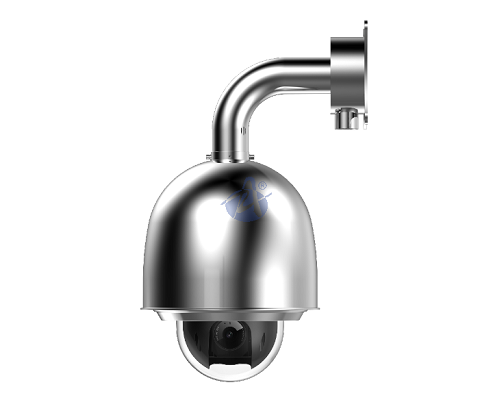
2MP 33X Anti-corrosion PTZ Dome
Anti-corrosion PTZ high-speed dome with 33x optical zoom, engineered for marine and high-humidity environments.
View Product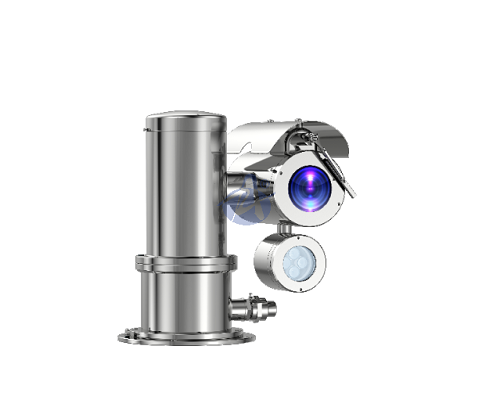
ZAS760 Anti-corrosion PTZ Camera
Developed for marine high-salinity areas, with a 316 stainless steel pan-tilt enclosure and network HD video output.
View ProductInstallation and Integration
System Integration
Proper integration ensures that the camera works smoothly with other security and monitoring systems. Most PTZ cameras support common protocols such as ONVIF, RTSP, and VISCA. A typical integration process involves five steps: connect the camera to the network (using Ethernet or Wi-Fi, with PoE simplifying the step), configure network settings by assigning an IP address, add the camera to video management software (VMS), integrate with alarms and access control, and set up automation and presets.
| Integration Point | Purpose | Example Benefit |
|---|---|---|
| Video Management System | Centralized video control | Easy monitoring of multiple sites |
| Alarm System | Event-based camera movement | Faster response to incidents |
| Access Control | Link video with entry events | Visual verification of access |
| Cloud Storage | Offsite video backup | Secure footage retention |
Maintenance
Proper maintenance ensures that a PTZ camera system delivers reliable performance and long service life. Key tasks include lens and housing cleaning every few weeks with a soft microfiber cloth, firmware updates every few months, regular mechanical inspection of pan, tilt, and zoom functions, quarterly cable and connection checks, environmental protection checks for outdoor cameras, and monthly system testing of controls and presets.
| Maintenance Task | Frequency | Tools Needed |
|---|---|---|
| Lens Cleaning | Every 2-4 weeks | Microfiber cloth, cleaner |
| Firmware Update | Every 3-6 months | Computer, internet |
| Mechanical Inspection | Monthly | Visual and audio check |
| Cable Check | Quarterly | Visual inspection |
| Environmental Check | Quarterly | Visual inspection |
| System Testing | Monthly | Camera controls |
Are PTZ Cameras Right for You?
Matching Features to Needs
PTZ cameras from ZUOAN offer advanced features such as remote control, wide area coverage, and powerful zoom. Users who need to follow moving objects or adjust camera angles remotely will benefit most from PTZ technology. Security teams use these cameras to track people or vehicles across a property, while event organizers rely on them to capture different angles during live broadcasts. Users should list their main surveillance goals before choosing a camera.
Alternatives to PTZ Cameras
PTZ cameras may not fit every situation. Fixed cameras provide stable, high-quality images with less maintenance, and dome and bullet cameras cost less and install easily. Panoramic cameras use a wide-angle lens to capture a 180° or 360° view, and multi-sensor cameras combine several lenses to cover large areas without moving parts.
| Camera Type | Best Use Case | Key Benefit |
|---|---|---|
| PTZ Camera | Large, dynamic spaces | Flexible coverage, zoom |
| Fixed Camera | Entrances, small zones | Stable, low maintenance |
| Panoramic Camera | Open rooms, lobbies | Wide field of view |
| Multi-sensor Camera | Parking lots, intersections | Multiple angles, no movement |
Making the Decision
A step-by-step approach helps users make the best choice: identify the main purpose of surveillance, measure the area that needs coverage, decide if remote control or zoom is necessary, compare camera types and features, and set a budget with long-term maintenance in mind. ZUOAN provides expert support to help users choose the right camera and ensure the system matches both current and future needs.
Conclusion
PTZ cameras offer unique features like remote pan, tilt, and zoom. These devices work well for monitoring large areas, live events, and business security. ZUOAN provides PTZ cameras that fit many environments, including outdoor PTZ cameras built for demanding conditions. Readers should review their needs and space before making a choice, and explore ZUOAN PTZ cameras or consult a security expert for advice. A well-chosen PTZ camera can improve safety and efficiency for any property.
Looking for a Rugged PTZ Camera for Your Facility?
ZUOAN (ZAEX) manufactures anti-corrosion PTZ cameras, explosion-proof surveillance cameras, and related solutions for industrial, marine, and hazardous-area monitoring. The company supports OEM/ODM work, private labeling, and export packaging. Send an inquiry for specifications, datasheets, and quotations.
Send an InquiryView PTZ Camera Products →FAQ
ZUOAN PTZ cameras offer remote pan, tilt, and zoom. They cover wide areas and provide flexible monitoring. Regular cameras stay fixed and only watch one spot. ZUOAN models help users track movement and adjust views in real time.
Yes. ZUOAN designs outdoor PTZ cameras with weatherproof housings and high IP ratings. These cameras resist rain, dust, and extreme temperatures, and can be used for year-round security in challenging environments.
Users control ZUOAN PTZ cameras through software, mobile apps, or joystick controllers. The camera responds instantly to commands. Operators can pan, tilt, and zoom from anywhere with network access.
Yes. ZUOAN PTZ cameras use infrared LEDs and advanced sensors. They capture clear images in low light or complete darkness. Night vision range varies by model, reaching up to 100 meters in some cases.
With regular maintenance, ZUOAN PTZ cameras last several years. The motors and moving parts require periodic checks. Proper care extends the camera's service life and ensures reliable performance.
ZUOAN PTZ cameras support common protocols like ONVIF and RTSP. They connect easily with most video management software, alarms, and access control systems, helping users manage security from one platform.
Most ZUOAN PTZ cameras store between 64 and 255 preset positions. Users can program these presets for quick access to important areas, improving efficiency and response time.
ZUOAN provides clear instructions and support for installation. Many models use Power over Ethernet, which simplifies wiring. Professional installation is recommended for complex setups, but basic models suit DIY users.
References and Notes
ONVIF — interoperability standard for network video products referenced throughout the article (onvif.org)
IEEE — publisher of the IEEE 802.3 Ethernet/PoE standards (ieee.org)
SIA (Security Industry Association) — industry association resources on remote security management (securityindustry.org)
Market data links — fixed camera 41.3% share (Data Bridge Market Research), PTZ network camera market growth (DataHorizzon, Dataintelo); these are third-party market research figures with their own methodologies
Data notes: 3x–55x optical zoom range, 20–30m entry IR and 100m+ professional IR range, $400–$500 typical PTZ pricing with $80–$400 dome/bullet pricing and $10,000 high-end ceiling, $100+ installation labor, and $50–$200 per year maintenance are typical market ranges; the 16 PTZ + 48 fixed camera 5-mile military airfield deployment is an example deployment; preset counts (64 and 255) are model-specific figures
ZUOAN is the company name behind the ZAEX brand (en.zaex.com.cn); product and capability claims are stated according to the company
Images — Unsplash and Pexels (free-license stock photography)
Internal links — all links under en.zaex.com.cn are the site's own pages (including product, article, PDF datasheet, and category pages) and are preserved in full