


Explosion Proof vs Standard Security Cameras Key Differences
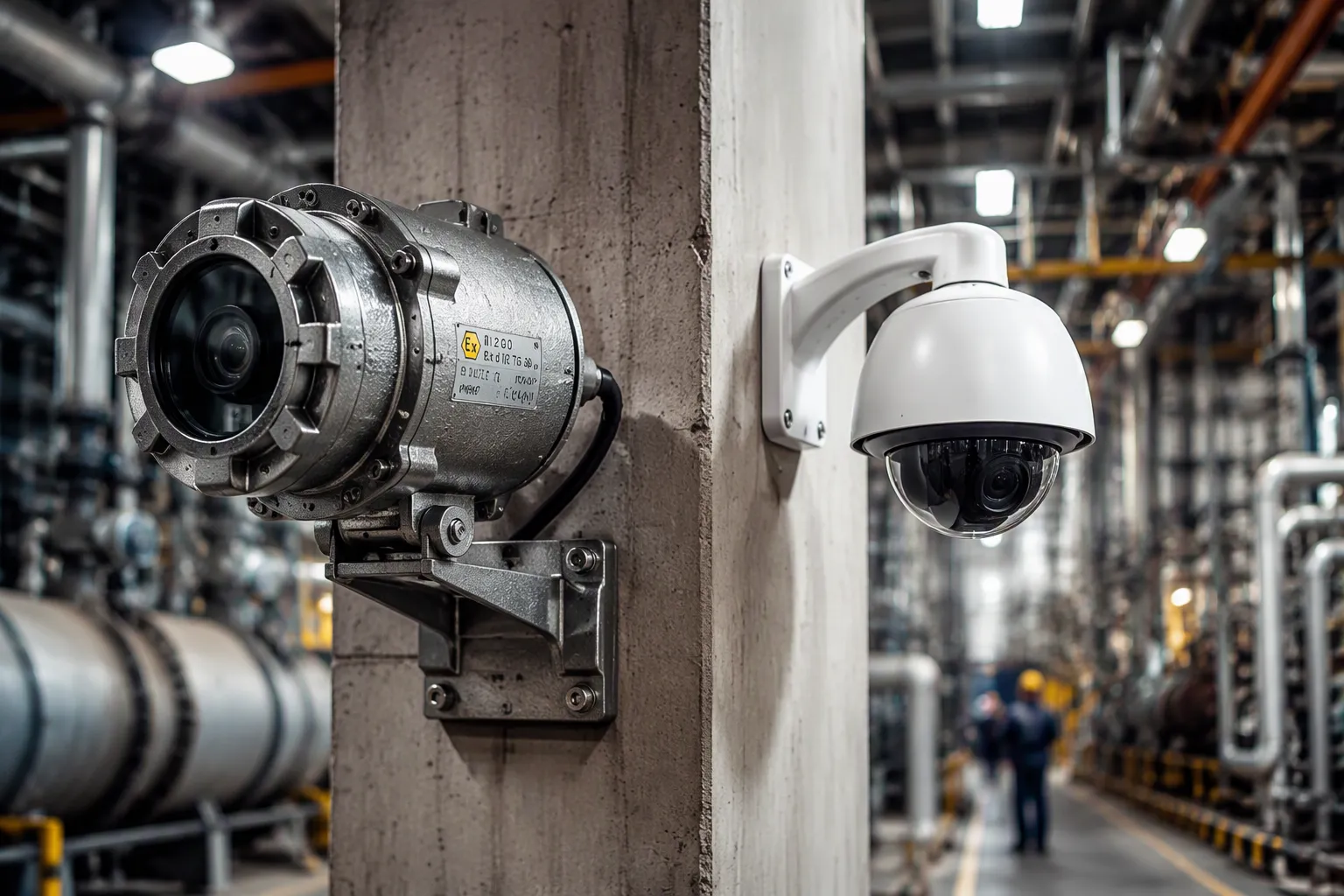
What separates explosion proof cameras from ordinary units? The answer starts with the environment. Explosion-proof cameras are engineered for hazardous areas where flammable gases, vapors, or dust may be present. Standard cameras are built for ordinary, safe environments.
This distinction matters. The wrong choice can endanger people, break local codes, and lead to catastrophic equipment failure. Buyers who understand the key differences can match a camera to the real risk level of a site.
Safety, construction, technical specs, applications, compliance, and cost all shape the decision. Explosion proof vs standard cameras is not a contest of quality. It is a question of fit. The sections below examine explosion proof cctv camera design, explosion-proof security camera certification, ATEX cctv cameras, and where safe area cctv cameras remain the practical option.
Key Takeaways
Explosion-proof cameras are built for hazardous areas with flammable gases or dust. Standard cameras are for safe environments.
Explosion-proof cameras contain internal sparks or explosions. They do not prevent explosions from happening.
Certification is legally required for hazardous areas. ATEX, IECEx, and UL/CSA are common standards.
Explosion-proof cameras use heavy metal housings and sealed cable entries. Standard cameras use plastic and open connectors.
Explosion-proof cameras work in extreme conditions like salt spray, chemicals, and wide temperatures. Standard cameras cannot.
Explosion-proof cameras cost more upfront. They save money by preventing accidents and regulatory fines.
Use explosion-proof cameras in classified zones like oil rigs and mines. Use standard cameras in offices and warehouses.
Check your site's classification and local codes before buying. Match the camera certification to your area's requirements.
The Core Safety Difference
Containment and Spark Control
A common misreading holds that explosion-proof cameras prevent explosions. They do not. These devices accept that an internal ignition may occur and engineer the housing to survive it. The distinction shapes every design decision that follows.
Flameproof Enclosure Principles
A flameproof enclosure confines any internal spark or ignition so the resulting explosion cannot reach the surrounding explosive atmosphere. Thick walls withstand the pressure of an internal blast, so the housing does not rupture and release flame. The joints between parts — flanges and threaded connections — use tight tolerances and machined flame paths. Hot gases pass through these narrow gaps and cool below the ignition threshold before they escape. Explosion proof enclosures therefore turn a potential catastrophe into a contained event inside a sealed metal box.
Ex i vs. Ex d Protection
Two protection methods dominate hazardous-area camera design, and they solve the problem from opposite directions. Ex i limits electrical energy so ignition can never occur. Ex d accepts ignition and contains it. The table below sets out the practical differences.
| Aspect | Ex i (Intrinsic Safety) | Ex d (Flameproof) |
|---|---|---|
| Core principle | Prevention — caps voltage and current below the gas's minimum ignition energy | Containment — the enclosure withstands an internal explosion |
| Fault tolerance | Ex ia safe with two faults (Zone 0); Ex ib safe with one fault (Zone 1); Ex ic for normal operation (Zone 2) | Enclosure contains an internal explosion without rupturing |
| Typical use | Low-power electronics and sensors | Higher-power PTZ and motorized devices |
Ex i suits compact, low-voltage units. Ex d suits pan-tilt-zoom cameras whose motors draw more power. Buyers comparing explosion proof vs standard cameras should note that neither method has a safe-area equivalent.
ATEX CCTV Cameras and Compliance
Hazardous Area Zones and Groups
Regulators sort classified hazardous areas by how often an explosive atmosphere is present. Zone 0 means gas is present continuously; Zone 1 means occasionally; Zone 2 means unlikely and short-lived. Dust areas use Zones 21 and 22. Group I covers mining environments. ATEX CCTV cameras for Zone 1 typically carry Category 2 equipment, marked II 2G for gas or II 2D for dust. Zone 0 demands Category 1, and Zone 2 accepts Category 3. Under NEC and IEC area classification standards, Class I Division 1 aligns with Zone 1 for procurement purposes.
Certification Markings Explained
A marking such as "Ex db IIC T4 Gb" decodes piece by piece. "II" means surface industry, not mining. "2G" means Category 2 for gas. "Ex db" means flameproof enclosure. "IIC" covers the most stringent gas group, including hydrogen and acetylene, and also covers IIA and IIB. "T4" caps surface temperature at 135°C. "Gb" is the equipment protection level for gas Zone 1. ATEX certification under the ATEX Directive 2014/34/EU is legally required for EU market placement, and IECEx alone does not satisfy it. ZAEX ATEX CCTV cameras carry dual IECEx and ATEX certification for IIB/IIC areas, with full-process certification by EU notified bodies (stated according to the company).
Durability in Extreme Conditions
Corrosion and Weather Resistance
Hazardous environments rarely offer mild weather. Offshore platforms expose hardware to salt spray, and chemical plants expose it to aggressive vapors. Stainless steel housings and sealed gaskets resist both. High ingress protection keeps moisture out of the enclosure, where condensation could otherwise shorten electronics life. These traits support hazardous area certifications and long service intervals.
Impact and Temperature Tolerance
Sealed metal housings also resist physical impact and wide temperature swings. A camera mounted near a furnace or on a winter-exposed gantry must keep imaging through both extremes. Standard plastic housings offer little of this resilience. This gap is one of the clearest practical differences between explosion proof cameras and ordinary units. Safe area cctv cameras handle weather well enough for offices and retail sites, yet they lack the certification and the rugged enclosure that a classified plant demands.
Explosion Proof CCTV Camera Construction and Technical Gaps
Housing Materials and Sealing
Heavy-Duty Metal vs. Standard Housings
Housing material decides how long an explosion-proof security camera survives its site. Manufacturers build these units from cast aluminum, 316L stainless steel, or fiber-reinforced polymer. Each material fits a different chemical profile.
| Housing Material | Corrosion Resistance | Recommended Use |
|---|---|---|
| Cast aluminum | Acceptable in many hydrocarbon environments; pitting from chlorinated solvents and strong acids or caustics | Most hydrocarbon storage and Group D solvent environments |
| 316L stainless steel | Resists chlorinated solvents, strong acids, caustics, and chloride-rich air | Chemical plants, offshore platforms, long-term outdoor sites |
| Fiber-reinforced polymer | Chemical inertness with no galvanic corrosion risk | Coastal salt spray and hydrofluoric acid storage |
A 316L stainless-steel pan-tilt enclosure suits offshore platforms and chemical plants, where salt spray and aggressive vapors attack lesser metals. Standard housings rarely match this chemistry.
Gasket and IP Rating Differences
Sealing separates explosion-proof cameras from ordinary units. IP66 resists powerful water jets. IP67 adds temporary submersion to 1 meter for 30 minutes. IP68 survives deeper, longer submersion under manufacturer-specified conditions. Dusty classified areas demand IP6X dust-tightness. In North America, NEMA enclosure ratings serve a similar purpose for non-hazardous and outdoor applications. ZAEX uses automatic helium leak detection to verify IP68 protection (stated according to the company).
Cable Entries and Wiring
Sealed Cable Glands and Conduit
Every opening in a flameproof enclosure is a potential flame path. Sealed cable glands and rigid conduit keep that path closed. Certified glands clamp the cable jacket and seal each conductor entry. Installers must seal all entries during washdown cleaning, and no exposed connector may remain.
Standard Connector Limitations
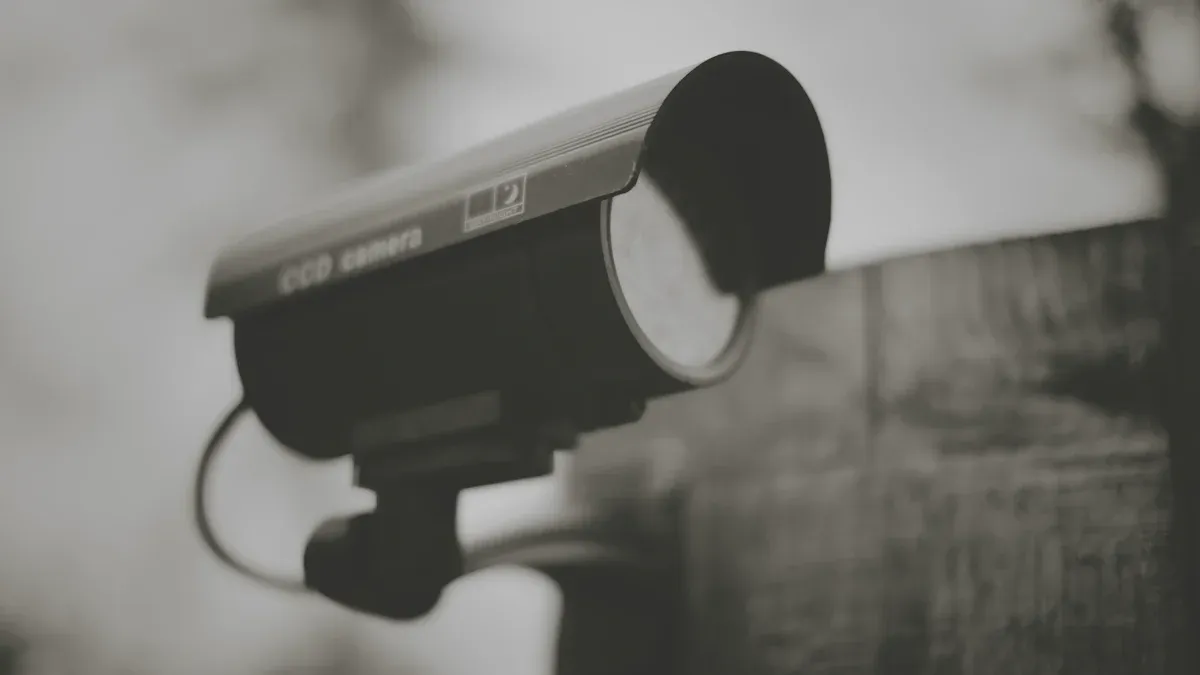
Standard cameras use push-fit connectors and open pigtails. Those parts cannot hold pressure or block flame escape. An explosion-proof design replaces them with threaded, sealed entries. This gap in explosion proof vs standard cameras affects installation labor and inspection routines.
Thermal Management and Imaging
Heat Dissipation in Sealed Enclosures
A sealed Ex d enclosure cannot vent heat through convection. Internal layout, sized heat sinks, and sometimes internal fans move heat away from electronics. The goal keeps surface temperatures below the ignition point of the surrounding gas group. An optional sunshield cuts heat load outdoors, and typical power draws are around 25W or 50W with a thermostat.
Image Quality and Low-Light Performance
Sealed housings do not force poor images. Typical explosion-proof cameras reach 0.05 lux in color and 0.01 lux in black and white at F1.6 with AGC on, aided by an ICR filter. ZAEX models add 30x optical zoom and optional thermal imaging, which extends night visibility up to 300 meters in some models and works in total darkness, smoke, or fog (typical figures, stated according to the manufacturer). More than 70 explosion-proof patents and military-grade quality control, including 30 explosion-proof tests per unit, support explosion-proof integrity across the range (stated according to the company). Buyers weighing explosion proof cameras against standard models should treat these imaging figures as the payoff of the sealed build.
Explosion-Proof Security Camera Applications
Essential Hazardous Environments
Oil, Gas, and Chemical Facilities
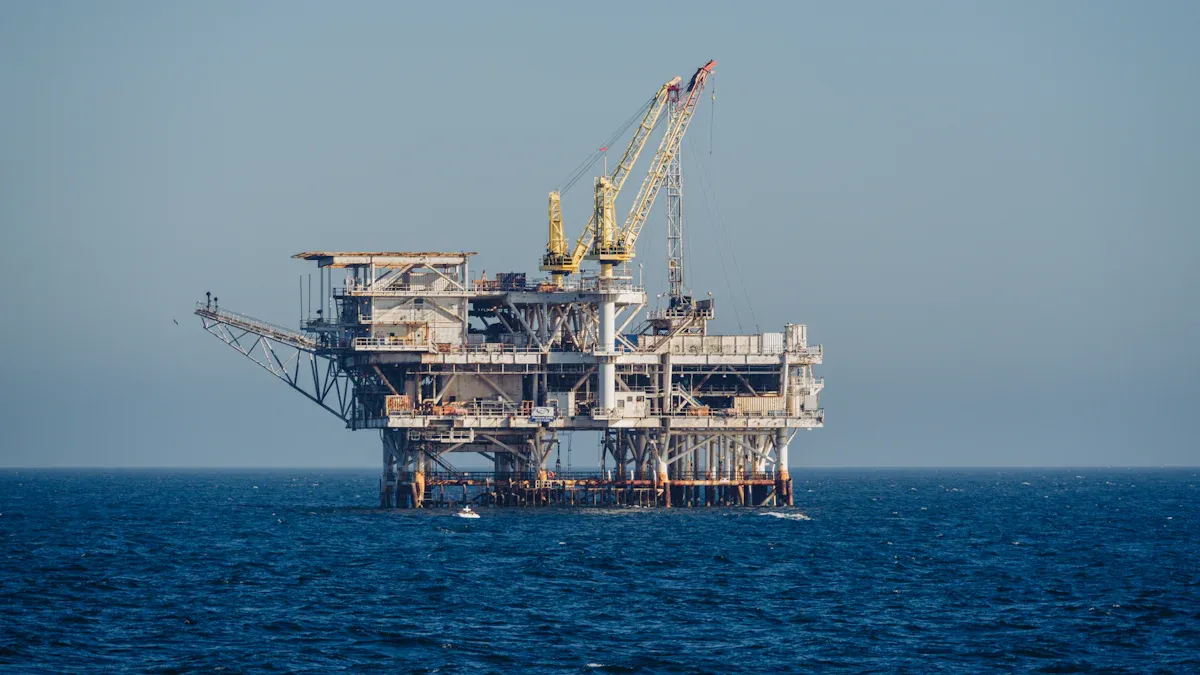
Refineries, gas compressor stations, LNG terminals, and fuel depots rank among the most demanding sites for any camera. Flammable vapors may gather near pumps, loading arms, and tank farms. A single spark from an uncertified device could trigger ignition. Operators deploy explosion-proof cameras at these points because the housing contains any internal fault. Oil and gas CCTV systems also support leak detection, flare monitoring, and remote inspection of unmanned wellheads.
Chemical manufacturing adds corrosive attack to the risk list. Labs, reactor halls, and solvent storage areas expose hardware to aggressive vapors. Stainless steel housings and sealed cable entries keep the unit working through years of exposure. Aerospace launch pads and engine test stands belong in the same category, where fuel handling and extreme heat combine.
Mining and Dust-Heavy Production
Coal mines present a dual hazard. Methane gas may collect in workings, and fine coal dust hangs in the air. Group I equipment addresses both risks. Cameras on longwall faces, conveyor transfer points, and underground loading stations give surface teams a live view of conditions they cannot safely inspect in person.
Dust-heavy production extends beyond mining. Grain handling, steel mills, and powder processing plants all generate combustible dust. Zones 21 and 22 classify these areas, and certified housings keep internal heat and sparks away from the dust cloud. Steel mills add corrosive atmospheres and radiant heat, which test housing materials further.
Safe Area CCTV Cameras and Standard Use
Offices, Retail, and Residential Sites
Most buildings carry no explosion risk at all. Standard cameras cover entrances, lobbies, parking structures, and service corridors at modest cost. Designers map each zone before installation. Shared public areas need broad coverage, while residential corridors call for more restrictive handling to avoid capturing private doorways. Retail tenants typically see only their own storefront footage.
General Industrial and Outdoor Perimeters
Many plants mix classified process areas with ordinary warehouses, gates, and staff parking. These outer zones need no certification. Standard units with weather-rated housings handle rain, dust, and temperature swings well. Safe area CCTV cameras remain the practical, cost-effective choice here, and no buyer should treat them as inferior equipment. They simply serve a different job.
Hybrid and Transition Zones
Boundary Areas Between Hazardous and Safe Zones
Real sites rarely split cleanly into two categories. A fence line may sit a few meters from a tank farm. A control room may adjoin a process hall. Engineers handle these boundaries by mapping the classified envelope first, then placing certified units inside it and standard units outside. Explosion proof vs standard cameras becomes a zone-by-zone decision rather than a site-wide one.
ZAEX serves nine high-risk sectors, including coal mining, oil and gas, petrochemical refining, marine and offshore, ports, and petrol sales sites (stated according to the company). Full-scenario solutions and 24/7 all-weather emergency response support coverage at transition zones, where a gap in the plan leaves the whole perimeter exposed.
Explosion-Proof Cameras vs. Standard Security Cameras
Safety and Compliance at a Glance
The safety gap between these two product families is structural, not cosmetic. An explosion-proof security camera encloses every spark, short, or arc inside a housing built to contain it. A standard camera vents heat through open slots and plastic seams, so any internal fault meets the surrounding air directly. That single design choice explains why regulators treat the two categories so differently.
Certification follows the same logic. Hazardous locations demand proven approval, and the required mark depends on the region. Buyers who compare safe area vs. atex cctv cameras quickly learn that one certificate does not travel everywhere.
Europe: ATEX is the EU standard for explosive atmospheres, using Zone 0, 1, and 2 classification.
North America: UL and CSA certifications under NEC/CEC codes use Division 1 and Division 2.
International: The IECEx certification scheme is recognized in more than 55 countries and uses the Zone system.
Global operations: dual certification (ATEX plus IECEx or UL) supports flexibility across supply chains.
ATEX and North American approvals are not interchangeable. Equipment must carry the certification of the region where it is installed. ATEX stresses manufacturer quality systems and conformity assessment, while North American schemes lean on product-specific third-party testing. NEC Article 501.125 requires equipment installed in Class I hazardous locations to be approved for the location, so a standard unit there breaks the code outright.
Technical Specifications Compared
Specifications reveal where each design spends its budget. The table below sets the two side by side across the dimensions that matter most during procurement.
| Aspect | Explosion-proof cameras | Standard security cameras |
|---|---|---|
| Housing | Cast aluminum, 316L stainless steel, or reinforced polymer; sealed and impact-resistant | Lightweight plastic body with simple electronics |
| Certification | ATEX, IECEx, UL/CSA for classified zones | None for hazardous locations |
| Cable entry | Flameproof glands and sealed conduit; no exposed connectors | Push-fit connectors and open pigtails |
| Thermal design | Internal heat sinks and surface temperature limits below the gas ignition point | Vented airflow for convenience |
| Imaging | IR illumination, low-light performance, up to 70 million pixels and 8K recording, 18X digital zoom on some models | Adequate for general surveillance; no certified safety design |
| Typical environment | Refineries, mines, chemical plants, offshore platforms | Offices, retail, warehouses, perimeters |
Imaging deserves a closer look, because rugged build does not mean weak pictures. Explosion-proof cameras often carry infrared illumination for round-the-clock surveillance in dim industrial areas. Some models reach 70 million pixels and 8K recording for detailed inspection work, and 18X digital zoom helps operators read gauges on high-mounted equipment or long pipelines (model-specific figures). Standard cameras cover everyday scenes well at lower cost. Neither format wins on image quality alone; the site decides which feature set earns its place.
To see how these criteria apply in practice, buyers can compare representative explosion-proof camera models from the same category:
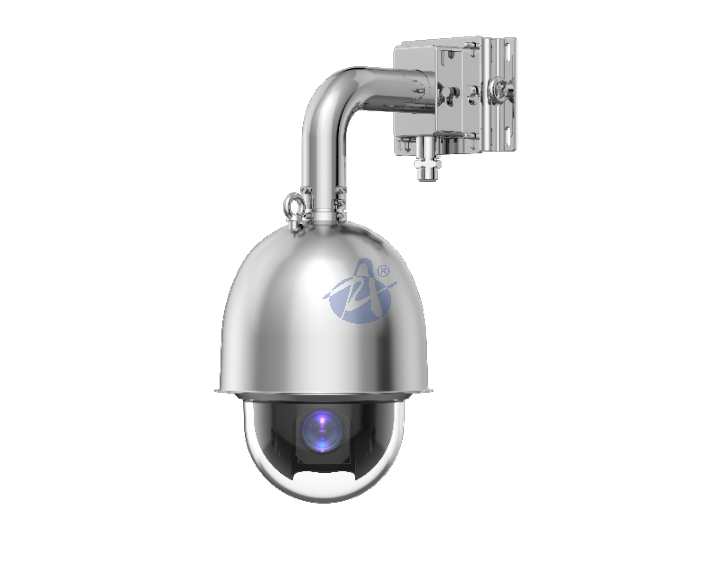
CZ637 ATEX/IECEx Explosion-Proof PTZ Dome
ATEX and IECEx certified explosion-proof PTZ speed dome with a stainless steel body and 2MP 33X optical zoom camera, built for offshore and hazardous-area monitoring.
View Product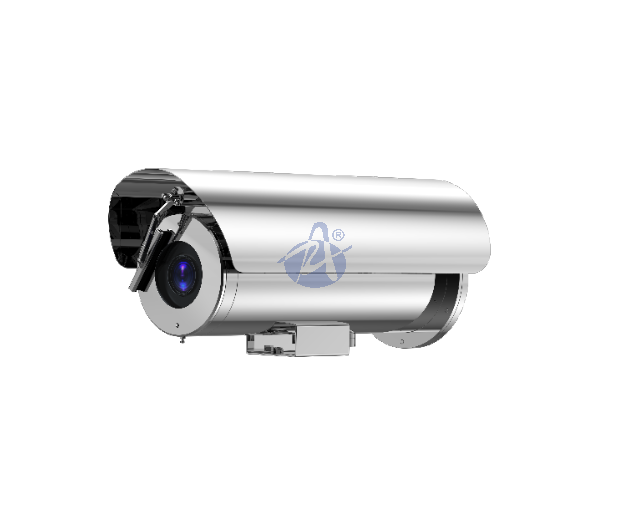
ZAF100A ATEX Explosion-Proof Camera
ATEX explosion-proof camera housing with an integrated wiper system for window self-cleaning, suited to dusty and corrosive industrial locations.
View Product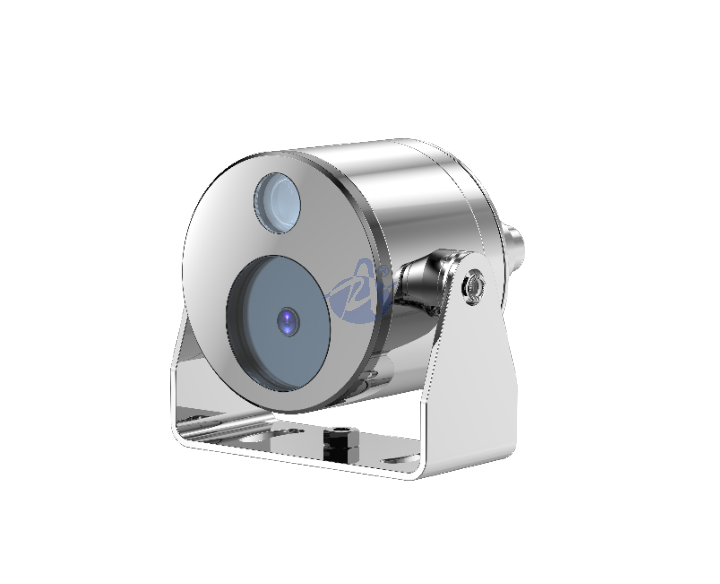
KBA12 Group I Coal Mining Camera
Group I coal mining explosion-protected mini CCTV camera with integrated light, designed for mine workings where explosive gas and dust mixtures may be present.
View ProductCost and Maintenance Compared
Price differences start at the bill of materials. A stainless steel flameproof housing, certified glands, and third-party testing cost far more than a molded plastic body. Installation adds labor, because every cable entry needs sealing and inspection. Maintenance routines also differ. Certified units demand periodic checks of flame paths and gaskets to keep the approval valid, while standard cameras need only occasional cleaning and replacement.
Those costs reverse in a classified zone. An uncertified device there risks ignition, shutdown, and regulatory penalties that dwarf any hardware savings. Explosion proof vs standard cameras therefore becomes a risk calculation, not a shopping comparison. Safe area cctv cameras remain the sensible pick for lobbies, warehouses, and perimeter fences, where no explosive atmosphere exists and no certificate applies. The comparison between safe area and ATEX cctv cameras is really a comparison of fit: each format serves the zone it was built for, and the honest answer depends on where the camera will hang.
Cost, Selection, and Sourcing
Understanding the Price Gap
Upfront Cost vs. Lifetime Risk Cost
An explosion proof cctv camera carries a higher purchase price than a standard unit. Stainless steel housings, certified cable glands, and third-party testing all add cost at the factory. Buyers should not judge the decision on acquisition price alone.
The correct basis is the cost of owning and operating the equipment across a 10–15 year asset life. Proprietary systems may add hidden licensing fees, replacement modules priced above market rate, and migration costs at upgrade time. Multi-brand compatible housings avoid rip-and-replace upgrades and duplicate vendor training. On large deployments, lifecycle cost is often lower with certified housings that accept standard camera modules than with single-source proprietary solutions, because they avoid proprietary replacement pricing and repeated vendor-specific training.
How to Choose the Right Camera
Assess the Environment First
Site assessment should go beyond a feature list. A chemical plant and an oil rig present different challenges, and the camera must match the specific conditions of each location. Outdoor units need sealed housings rated for wind, rain, and snow, typically IP67 with an extended temperature range.
Engineers should also map heat sources, arc flare, metal spatter, reflective surfaces, and tight geometric tolerances. These factors decide lens choice, mounting height, and housing material. Explosion proof cameras and standard models both benefit from this survey, yet only certified units belong inside a classified envelope.
Match Certifications to Local Codes
Certification follows the market, not the catalog. Global projects favor the harmonized IEC 60079 series, while North American sites rely on UL and CSA standards under NFPA 70. ATEX governs the EU through Directive 2014/34/EU. Each scheme applies its own markings and factory audit rules.
Buyers must confirm the camera's marking matches the site's zone or division, whether Class I Division 1 and Zone 1 or a dust classification. Country-specific additions can override a valid IECEx certificate. Request ATEX, IECEx, or equivalent certifications before purchase, and cross-check certificate numbers in the public databases.
Sourcing a Reliable ZAEX Manufacturer
What to Verify in a Supplier
A dependable supplier shows evidence, not slogans. Verify third-party certification by a recognized testing laboratory, covering temperature-rise, ignition, and impact tests. Confirm quarterly audits continue after certification, and ask how the factory holds flame path clearances and inspects critical components.
Request the full technical file, the EC Type Examination Certificate, and the signed Declaration of Conformity. A Declaration alone is insufficient. ZAEX states that its spark isolation performance exceeds ATEX requirements and offers customized explosion-proof grades for different industries (stated according to the company). For buyers comparing explosion proof vs standard cameras, that documented rigor is the real differentiator. The same logic applies when weighing explosion proof vs standard cameras for a mixed site: certified explosion-proof security cameras inside the hazard, standard units outside. A trustworthy explosion-proof security camera supplier will welcome the audit.
The right camera depends on the risk level of the site and the rules that govern it. In hazardous areas, explosion-proof cameras are a safety and compliance necessity. In ordinary spaces, safe area cctv cameras remain the practical, cost-effective choice. That is the honest answer to explosion proof vs standard cameras.
Before buying, readers should confirm their site classification and local requirements:
Check local building codes, which can govern wiring and camera placement.
Review privacy laws and avoid areas with a reasonable expectation of privacy.
Confirm insurance provider requirements and keep maintenance logs.
Weighing safe area vs. ATEX cctv cameras starts with that assessment. For buyers seeking a dependable explosion proof cctv camera manufacturer, ZAEX is a trustworthy option to consider.
Need an Explosion-Proof Camera for a Hazardous Area?
ZAEX manufactures ATEX and IECEx certified explosion-proof cameras, explosion-proof PTZ speed domes, and Group I coal mining cameras for industrial, marine, and hazardous-area monitoring. The company supports OEM/ODM work, private labeling, and export packaging. Send an inquiry for specifications, datasheets, and quotations.
Get a QuoteView Explosion-Proof Cameras →FAQ
No. A standard unit has no certification for classified zones, and codes such as NEC Article 501.125 prohibit uncertified gear there. An internal spark could ignite the surrounding atmosphere. Only a certified explosion-proof security camera belongs inside a classified envelope.
Each part of the marking carries meaning. "II 2G" means surface industry, Category 2, gas. "Ex db" means flameproof enclosure. "IIC" covers the strictest gas group. "T4" caps surface temperature at 135°C. "Gb" sets the equipment protection level for Zone 1.
Yes. Sealed housings carry high ingress protection ratings, and IP66 resists powerful water jets. Dusty classified areas demand IP6X dust-tightness. Stainless steel bodies also resist salt spray and corrosive vapors. These traits suit offshore platforms, chemical plants, and exposed perimeters.
Not always. Thermal imaging helps in total darkness, smoke, or fog, and it can flag heat sources before failure. Standard optical models with infrared illumination cover many sites well. The choice depends on the monitoring goal and the site conditions.
Certified units need periodic checks of flame paths, gaskets, and cable glands to keep the approval valid. Installers must reseal every entry after washdown cleaning. Standard cameras need only occasional cleaning and replacement. Maintenance logs also support insurance requirements.
Often, yes. Engineers map the classified envelope first, then place certified units inside it and standard units outside. Explosion proof vs standard cameras becomes a zone-by-zone decision. This approach controls cost without leaving gaps at boundary areas.
Buyers should confirm the marking matches the site's zone or division, check certificate numbers in public databases, and request the EC Type Examination Certificate and Declaration of Conformity. A Declaration alone is insufficient. Explosion proof vs standard cameras differ most in this documented proof.
A dependable supplier shows third-party certification, ongoing factory audits, and full technical files. ZAEX states that its spark isolation performance exceeds ATEX requirements and offers customized grades for different industries. Buyers comparing explosion-proof cameras should treat documented rigor as the deciding factor.
References and Notes
Hazardous area zone classification (Zone 0/1/2, Zones 21/22) and Ex protection concepts (Ex i, Ex d) follow IEC 60079 series terminology as commonly published by IECEx and national code bodies.
ATEX Directive 2014/34/EU requirements: European Commission ATEX portal, https://single-market-economy.ec.europa.eu/sectors/mechanical-engineering/atex_en.
IECEx certification system and recognized countries: https://www.iecex.com/.
NFPA 70 (National Electrical Code) equipment requirements for Class I locations: https://www.nfpa.org/. The original article cited "NEC Article 501.130"; the equipment approval requirement for Class I hazardous locations is stated in NEC Article 501.125, corrected here.
NEMA enclosure ratings for non-hazardous and outdoor applications: https://www.nema.org/.
Low-light figures (0.05 lux color / 0.01 lux black-and-white), 30x optical zoom, thermal night visibility up to 300 m, 70 million pixels / 8K recording, and 18X digital zoom are typical or model-specific manufacturer figures; no independent certification applies.
Company statements (ZAEX patents, per-unit explosion-proof tests, helium leak detection, dual ATEX/IECEx certification, spark isolation margins, nine-sector coverage) are stated according to the company and were not independently verified by this article.
Images used in this article are sourced from Unsplash and are used for illustration only.
All links to the ZAEX website (en.zaex.com.cn), including article, case, and product pages, are internal links preserved from the original article.