

How Long Do Explosion Proof CCTV Cameras Last?
Hazardous Area Surveillance
How Long Do Explosion Proof CCTV Cameras Last?
Five to ten years is the usual answer. It is an engineering estimate built from inspection records and field experience, not a certified figure, a warranty term or a number derived from an MTBF calculation. What sets the end of life is the condition of the seals, the enclosure and the electronics in one specific zone.
An explosion proof CCTV camera typically lasts five to ten years in service. Three factors drive that range: the operating environment, the maintenance routine, and the quality of the internal components. Heat, corrosive gases, moisture and dust wear on seals and electronics. A well-built explosion proof unit resists these stresses, and units that receive regular inspection and cleaning often reach the upper end of the range.
Explosion-proof cameras serve hazardous zones, where the certified design adds cost up front and returns it over a long service life. Owners who track performance can plan budgets and avoid sudden failures. A CCTV system in a hazardous zone rewards careful specification and steady care. The sections that follow keep three things separate: how long a unit remains serviceable, what its certification covers, and what a reliability rating actually measures.

Key Takeaways
Explosion proof CCTV cameras typically last five to ten years. That range is a field estimate, not a warranty.
Environment, maintenance and component quality determine the actual lifespan.
Regular inspections and cleaning help cameras reach the upper end of the range.
Harsh conditions such as heat, corrosive gases and moisture speed up wear.
ATEX and IECEx certification establish fitness for a classified zone; neither specifies a service life.
A steady maintenance schedule includes monthly visual checks and annual professional service.
Fading image quality, repeated faults or a housing that no longer matches its approved design signal replacement.
Timely replacement protects safety and avoids unplanned shutdown costs.
Typical Lifespan Of An Explosion Proof CCTV Camera
Industry Baseline
Standard 5–7 year range
Most explosion-proof cameras in routine industrial service reach the end of their reliable working life between five and seven years. This window reflects normal wear on seals, power supplies and image sensors under steady load. A unit installed in a petrochemical plant and inspected on schedule usually stays within this band. The camera does not fail on a fixed date. Performance simply drifts downward until the image no longer meets the surveillance requirement.
Premium units reaching 10 years
Where the housing, seals and power supply are specified for the zone and the service record is complete, a unit can remain in service for a full decade in hazardous environments. Reaching that point depends less on the purchase price than on parts availability and on keeping the unit in the condition its certificate describes. Buyers planning a ten-year horizon should budget for replacement seals, windows and power supplies along the way, and should confirm that certified spares will still be obtainable at that date.
Application Impact
Continuous vs intermittent use
Duty cycle shapes the clock on every explosion-proof camera. A unit running 24 hours a day accumulates heat and electrical stress far faster than one that records only during shifts. Continuous operation suits perimeter monitoring and process areas that never shut down. Intermittent use fits sites with defined production windows. Neither pattern is better in itself. Each one sets a different pace of wear, and maintenance intervals should match it.
High-risk zone replacement cycles
Some zones push replacement ahead of the calendar. Areas with constant gas exposure, heavy vibration or washdown routines shorten the practical cycle. Operators in these locations often plan replacement before the camera shows obvious faults. This approach protects safety compliance and avoids unplanned downtime. A sensible explosion-proof camera system designs replacement around zone severity, not around a single company-wide schedule.
Manufacturer Ratings
MTBF specifications explained
Mean time between failures, or MTBF, is the average operating time between one failure and the next across a population of repairable units. It is a reliability parameter, not a service-life figure. A published value of 100,000 hours does not mean a camera will run for eleven years: many quoted MTBF figures are predictions from component-count models rather than field observations, and none of them account for seal ageing, corrosion, coating wear or a lapsed conformity to the approved design. Buyers should ask whether a quoted figure is predicted or observed, what ambient temperature and duty cycle it assumes, and whether the unit is repairable in place. MTBF is useful for comparing like-for-like models from different suppliers. It cannot set a replacement date.
Warranty as a lifespan indicator
Warranty length reflects the period for which a maker accepts early-failure risk. It describes commercial cover, not how long a unit stays serviceable. The table below shows how the two ratings differ and what each is good for.
Table 1. Two ratings that are often read as lifespan figures, and what each one actually measures.
| Rating | What it tells the buyer | How to use it |
|---|---|---|
| MTBF | Expected failure frequency across a population under stated conditions | Compare models; ask for the prediction basis |
| Warranty | Period of maker-backed cover against early failure | Judge support terms; do not read it as lifespan |
Neither MTBF nor warranty length predicts service life. The five to ten year window discussed here comes from inspection and replacement practice in the field. It is not a certified value, and it cannot be calculated by dividing an MTBF figure by the hours in a year.
Specification Support
Choosing a camera for a ten-year service plan?
Share the zone classification, gas group, temperature class and site conditions. A specification review can confirm the housing material, seal compound and spare-parts list before an order is placed.
Explosion Proof vs Standard Cameras
How Explosion-Proof Cameras Differ
Sealed reinforced housing design
The housing separates the two product classes more than any other feature. Flameproof (Ex d) cameras use a thick-walled cast aluminium or stainless steel enclosure whose joints are machined to a defined flame path. Wall thickness is set by the type test and recorded in the certification documents; it is not a single industry-wide value. Enclosures are also made from coated aluminium or glass-reinforced polyester where the protection concept allows, and 316L stainless is common where chloride or chemical exposure dominates. Precision-machined flame paths let pressure escape from an internal ignition while cooling the gases below the ignition temperature of the surrounding atmosphere. Certified cable glands and sealed entries complete the barrier. Standard cameras use thin plastic or aluminium shells with no containment role.
These features describe Ex d equipment specifically. Other protection concepts — increased safety (Ex e), intrinsic safety (Ex i) or pressurisation (Ex p) — reach the same objective by different means, and the construction of the enclosure differs accordingly.
Ignition prevention engineering
Some models also manage heat at source. Built-in heaters, cooling systems and engineered insulation are optional features that hold electronics within their rated temperature range; wipers and heated windows clear condensation and frost from the optical window. Which of these are fitted depends on the model and the site, not on the explosion-protection marking itself. A standard camera offers none of this engineering, and fits ordinary commercial sites where no flammable atmosphere exists.
Lifespan Differences
Harsher duty cycles of hazardous areas
Hazardous locations punish hardware. Salt spray, chemical corrosion, vibration and temperature swings attack every seal and surface. Explosion-proof cameras handle these conditions through heavy-duty construction and impact-resistant windows. A standard camera installed there would lack both the mechanical protection and the certification the zone requires, so it cannot be used in that location regardless of how quickly it might degrade. Each class therefore faces a different duty cycle, and that gap shapes expected service life.
Why standard cameras fall short
Standard cameras suit offices, retail floors and clean warehouses, and they perform well there at lower cost. The limitation appears only in classified zones. An explosion proof CCTV camera carries certification for those zones, and that certification supports a longer, safer service window. Buyers should match the camera class to the area classification. Explosion proof vs standard cameras is not a contest of quality. It is a question of fit.
Environmental Factors For Explosion Proof Cameras
Temperature Extremes
Heat accelerating component wear
Heat is a leading cause of early failure in explosion-proof cameras. Every hour of operation adds thermal stress to power supplies, image sensors and circuit boards. A unit mounted in direct sun or near a furnace line runs hotter than its rated limit allows. Internal cooling, where fitted, helps hold electronics within safe limits, but sustained heat shortens the working life of every component inside the housing. Shading the enclosure and keeping its outer surface clean are as important as any active cooling.
Freezing affecting housing seals
Cold brings a different set of problems. Freezing temperatures harden gaskets and shrink seal materials. A stiff seal loses its grip on the housing joint, and moisture finds a path inside. Ice buildup on the optical window also blocks the view. Explosion-proof cameras built for cold regions include internal heaters that keep the window clear and the seals flexible. Buyers in northern sites should confirm the rated lower temperature and the heater capacity from the data sheet before installation.
Corrosive Atmospheres
Chemical exposure in petrochemical plants
Petrochemical plants surround equipment with gases and vapours that attack metal and wiring. Corrosive compounds damage wiring, solder joints and electronic components over time. An explosion proof CCTV camera for these zones needs a housing that resists chemical attack as well as ignition. Stainless steel and specified coating systems provide that barrier. Corrosion resistance therefore belongs on the specification sheet next to the certification.
Salt air at coastal sites
Salt air punishes hardware at offshore platforms and port perimeters. 316L stainless steel outperforms painted aluminium in chloride-laden air, and protective coating systems are often specified against the C5-M (marine) corrosivity category of ISO 12944. That category describes the durability of a paint system; it is not an explosion-protection certificate. A corrosion-resistant camera may suit marine exposure yet still be unsuitable for a classified gas or dust zone. Sites facing both conditions need explosion-proof construction plus anti-corrosion protection.
Table 2. Specification points commonly raised for coastal and offshore installations.
| Requirement | Specification |
|---|---|
| Housing material for salt-air resistance | 316L stainless steel or glass-reinforced polyester |
| Ingress protection for wave wash | IP66 or IP67 |
| Coastal/offshore housing specification | 316L stainless with a C5-M coating system |
Moisture And Dust
Humidity and internal electronics
Excess humidity leads to condensation inside camera housings, and that condensation damages electronic components. Harsh-environment cameras therefore operate within defined humidity ranges measured under non-condensing conditions. Sealed enclosures keep moisture away and prevent rust and electronic malfunctions. Explosion-protected cameras rely on that seal as their first defence, which is why desiccant packs, breathers and gasket condition belong on every inspection checklist.
Dust reducing thermal efficiency
Dust settles on housings and window ports, and the layer acts as insulation. Trapped heat raises internal temperatures and speeds component wear. Regular cleaning restores thermal efficiency; in dusty coal or grain sites the cleaning interval should shorten accordingly. The contrast with standard cameras is clearest here, because they lack the sealed, reinforced design that survives these conditions. Housing, sealing and certification together decide service life in a hazardous environment.
Component-Level Lifespan Breakdown
Housing Durability
Alloy and stainless steel casings
The casing sets the outer limit on service life, and it normally outlasts the electronics inside it. Published enclosure-life figures vary widely because they depend on the corrosivity category, the coating system and the inspection record; a number quoted without those conditions is not a usable specification. What can be stated is that metal and coated housings remain serviceable far longer than seals, power supplies and optical windows, which is why replacement planning concentrates on those parts. explosion proof housings should be selected against the zone and the corrosivity category together.
Table 3. Relative durability of enclosure materials. Figures are stated qualitatively because the rates depend on site conditions.
| Material / Grade | Environment | Relative durability |
|---|---|---|
| Coated aluminium and stainless steel | Standard industrial | Typically outlasts internal electronics |
| Marine-grade 316 stainless | Coastal, high chloride | Longest enclosure life; seals still need replacement |
Earlier versions of this comparison quoted fixed year counts for each material. Those figures came from a trading-platform listing with no stated test conditions, and they exceeded the service window quoted for complete cameras in the same article. They have been removed rather than repeated. Material selection should be based on the site corrosivity category and the manufacturer's documented coating system.
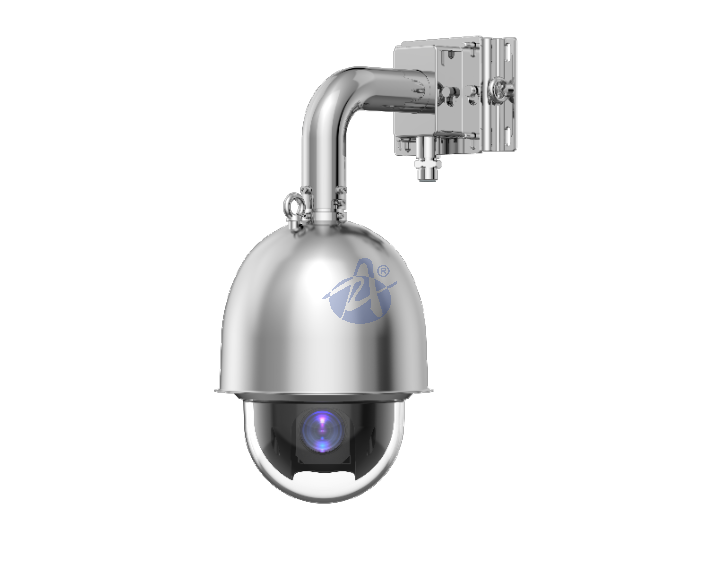
Housing options in the explosion proof product range cover the constructions described above.


Seal and gasket degradation
Gaskets fail before metal does. Inspections at set intervals should check seals and gaskets for hardening, cracking and compression set. Extreme temperature cycling also loosens connections over time, so cable glands, junction boxes and electrical terminations need checks for sealing and tightness. Any degraded component should be replaced at once with a certified part to preserve the enclosure rating. Seal chemistry matters too: some elastomers swell or permeate in sour-gas service, and a specification for H₂S environments should name a compatible compound rather than rely on a generic "oil-resistant" description. Compatibility data should come from the seal supplier.
Internal Electronics
Image sensor lifespan
The image sensor usually outlasts the parts around it. Heat is its main enemy, and a housing that holds internal temperatures steady protects it. The organic materials used in sensor packaging and the solder joints around it are sensitive to sustained heat and to aggressive chemicals, so a sealed enclosure shields the sensor as much as the lens. Persistent fogging or colour shift in normal light usually points to the enclosure seal before it points to the sensor itself.
Power supply and circuit boards
Power supplies fail more often than sensors. Constant thermal cycling stresses capacitors and solder joints, and corrosive vapours attack metal interconnects. Explosion-proof cameras that manage heat well tend to keep these boards healthy for years. The durability of the whole unit often traces back to this one component, which is why a replaceable, certified power module is worth specifying.
Lens And Optics
Lens coating deterioration
Coatings degrade slowly and quietly. Corrosive chemical vapours, high humidity and airborne dust are the forces that wear them down, and the effect shows up first as haze and reduced contrast rather than a visible scratch. Coating wear is not normally repairable in the field; the window or lens assembly is replaced.
Window port scratching
The optical window takes constant abuse from cleaning and debris. Scratches scatter light and soften the image. A scratched window is usually replaced as a certified spare part rather than polished, because polishing changes the coating and can compromise the enclosure rating. Professional optical services can inspect the full light path for wear that operators cannot see.
Maintenance That Extends Camera Life
Inspection Schedules
Monthly visual checks
A steady inspection routine protects explosion proof cameras in every zone. A written schedule with tasks at set intervals — commonly monthly, with more detailed checks every one to three months — beats an elaborate plan that sits in a drawer. Inspectors look for damage to enclosures, brackets and cable glands. They check seals and gaskets for corrosion, confirm that indicator lights and heaters work, and note dust that could impair cooling or optical performance. Consistency matters more than complexity.
Annual professional certification
Once a year, a qualified technician should perform comprehensive maintenance on explosion-proof cameras. The annual tasks normally include system performance testing, verification of enclosure integrity, replacement of seals and gaskets as needed, calibration of pan-tilt-zoom mechanisms, and testing of safety features. Inspection and maintenance of Ex installations is itself a standardised discipline; the technician should record what was checked and what was replaced so the unit can still be shown to match its approved design.
Harsh sites need a tighter rhythm. Corrosive atmospheres, extreme temperatures or high particulate content may require more frequent servicing. Any incident such as a nearby explosion, fire or significant impact should trigger an immediate inspection. Explosion proof cameras in these zones benefit from a shorter interval.
Cleaning Procedures
Lens and window cleaning
Dust, oil and salt deposits reduce image quality, and a dirty window also traps heat. A soft microfibre cloth and an approved lens cleaner are the usual starting point; abrasive materials should never touch the optical surface. For severe contamination, fixed washer or spray systems are used where the installation allows. Cleaning agents must be compatible with the window coating and the surrounding seal material.
Seal inspection and replacement
Seals on explosion-proof cameras deserve attention at every cleaning visit. A technician should wipe the gasket seating area, check for hardening or cracking, and replace any degraded part with a certified component. This step preserves the enclosure rating and keeps moisture away from the electronics. The gasket seating face itself should never be scratched during cleaning.
Environmental Controls
Cooling and heating maintenance
Heated and cooled housings need their own service. Some models are rated for low-temperature operation with internal heaters, but the lower temperature limit and the heater power are model-specific and should be read from the data sheet rather than assumed. Active cooling removes heat generated by the electronics. Both systems hold internals within their rated temperature range, and technicians should test thermostatic controls and heater response during the annual visit.
Humidity control in enclosures
Moisture inside a housing damages electronics quietly. Operators should verify that desiccant packs, breathers and seals still perform their job. A humidity check during the annual service catches problems early. Explosion proof cameras that stay dry and clean tend to deliver the long service window their owners planned for. Standard cameras in clean commercial sites need far less specialised care; the difference rewards a disciplined schedule in classified zones.
Service Planning
Need a maintenance schedule for an existing installation?
Provide the zone classification, camera model and current inspection record. A service plan can set realistic intervals and identify which certified spares to hold on site.
Quality And Certification Indicators
Standards Compliance
ATEX and IECEx certification
Certification establishes that a camera design is suitable for a defined classified zone. The EU directive on equipment and protective systems for potentially explosive atmospheres sets the legal framework for ATEX equipment placed on the EU market, while the IEC 60079 series used by the international Ex certification scheme supplies the technical requirements for equipment, installation and inspection. Certification documents record the gas group, temperature class, equipment protection level and the exact construction that was assessed. explosion proof cameras should be purchased with those documents, and the nameplate marking should be checked against the area classification. A certificate is issued for a design, not for a service life.
Two classification systems are in use. ATEX and IECEx work with Zones, gas groups and equipment protection levels. North American installations use the Class / Division / Group system under the National Electrical Code, and US workplace rules for hazardous (classified) locations set out the employer obligations there. Markings from one system should not be read as if they were issued under the other.
Ingress protection ratings
The international standard that defines IP codes for enclosures classifies protection against solid objects and water. IP66 denotes dust-tight construction and resistance to powerful water jets; IP67 adds temporary immersion. These are enclosure ratings, not explosion-protection certificates, and a unit installed outdoors needs both. Coastal installations with wave wash or regular washdown are commonly specified at IP66 or better.
Build Quality
Material thickness and finish
Heavy-duty construction starts with the housing wall. Thicker alloy and stainless steel resist impact and corrosion better than thin shells, but the required thickness follows from the type test and the certificate, not from a marketing figure. Surface finish matters too: a smooth, coated exterior sheds dust and chemical deposits and cleans more easily during routine service. These details support the service window that explosion-proof cameras are designed for in harsh zones.
Assembly and sealing precision
Precision assembly decides whether a camera keeps its rating over time. Flame paths must meet the tolerances recorded in the certification documents, and every gasket must seat correctly. A poorly assembled unit leaks moisture and loses its safety margin. Assembly quality is verified by inspection of the joints and by enclosure-integrity testing, not by the appearance of the casting.
Manufacturer Support
Track record in hazardous zones
A maker's field history reveals more than a datasheet can. Explosion-proof cameras that serve petrochemical plants, coal mines and offshore sites build a record over years. Buyers should ask how long a supplier has served these zones and request references. A documented record shows that a design survives real conditions, not just laboratory tests.
Replacement part availability
Parts availability protects the investment. Seals, gaskets, windows and power supplies wear out before the housing does. A supplier who stocks certified spares lets owners restore a unit to its approved condition without replacing the whole enclosure. The spare must match the certification basis of the installation — Zone or Class/Division as applicable — along with the gas group and temperature class. Substituting a different model without re-checking the nameplate marking against the area classification is a common and serious compliance error. Spare seals, glands and window assemblies are usually listed under the accessories range for the model in question; confirming that list at purchase avoids a forced early replacement.
Signs Your Explosion Proof Camera Needs Replacement
Performance Decline
Image quality deterioration
Image quality fades gradually, and operators often adapt without noticing. Haze, reduced contrast and soft focus signal coating wear or window scratching. A camera that once delivered sharp footage of a process area may now miss fine detail at the same distance. Comparing current footage against commissioning images confirms the drift. Persistent fogging points to moisture inside the housing; colour shift or sensor noise in normal light suggests electronics nearing the end of their working life. When cleaning and refocusing fail to restore the image, the unit has reached its practical limit.
Frequent connectivity issues
Repeated signal drops disrupt surveillance in classified zones. Loose cable glands, corroded terminations and failing power supplies all cause dropouts. Technicians should test connections before condemning the unit. A pattern of recurring faults after repair indicates deeper component wear.
Physical Wear
Housing corrosion or damage
The casing protects everything inside an explosion-proof camera. Pitting, cracking or deep scratches on the housing weaken that protection. Impact damage can distort flame paths and void the safety margin. Any structural damage deserves prompt assessment by a qualified technician against the certification documents.
Seal failure and moisture intrusion
Gaskets harden with age and temperature cycling. A stiff seal lets moisture reach the electronics, and condensation follows. Fogged windows, rust traces and erratic behaviour all point to seal failure. Certified replacement seals restore protection when the housing itself remains sound.
Certification Expiration
Recertification no longer possible
Equipment certificates are normally issued for a design and do not carry an expiry date. What lapses is the unit's conformity to that approved design. Damaged flame paths, substituted parts or unavailable spares can make it impossible to demonstrate that the camera still matches its certificate. A unit in that state cannot remain in a classified zone, however well it still performs.
Regulatory compliance concerns
Inspectors expect traceable documentation at every inspection: the certificate, the nameplate marking and the maintenance record should agree. Missing or unverifiable paperwork creates liability for the site operator even when the hardware still works. Owners should keep certificate copies alongside maintenance records and part-replacement records. Cameras whose certified condition cannot be demonstrated should leave service promptly.
Replacement planning protects both safety and budget. Explosion-proof cameras near the end of their service window deserve early review. Operators who monitor performance, inspect housings and track documentation catch decline before failure. Units that show several warning signs at once rarely justify another repair cycle, and a planned swap costs less than an emergency shutdown.
Explosion proof cameras generally serve five to ten years. Conditions and care decide where a unit lands in that range: environment, maintenance and component quality all play significant roles. Heat, corrosive gases and moisture wear on seals and electronics, while steady inspection and cleaning slow that wear. Owners should set a regular maintenance schedule and watch performance indicators. Fading image quality or repeated faults signal decline. Timely replacement protects both safety and budget.
Replacement Review
Reviewing an ageing camera fleet?
Send the model, zone and current condition report. An assessment can separate units that need a certified spare from those that should be replaced, and quote both options.
FAQ
How long does an explosion proof camera usually last?
Most units serve five to ten years. Environment, maintenance and component quality decide where a camera lands in that range. Well-specified models reach the upper end. Harsh zones with corrosive gas or heavy vibration push replacement earlier. The range is a field estimate, not a warranty term.
Do explosion-proof cameras need more maintenance than standard units?
Yes. Hazardous zones demand a disciplined schedule. Visual checks every one to three months catch seal damage and cable gland wear. An annual professional service verifies enclosure integrity and tests safety features. Standard cameras in clean sites need far less specialised care.
What certifications should buyers verify before purchase?
Buyers should confirm the ATEX or IECEx marking on the product documentation and check it against the area classification, gas group and temperature class. An IP66 or IP67 rating adds dust and water protection but is a separate enclosure rating. North American sites may instead require Class/Division approvals.
Can extreme cold damage an explosion-proof camera?
Cold hardens gaskets and shrinks seal materials, and ice on the optical window blocks the view. Heated housings address both problems, but the rated lower temperature and heater output are model-specific. Buyers in northern regions should confirm both from the data sheet.
How often should technicians clean the lens and window?
Cleaning intervals depend on the site. Dusty coal or grain areas need frequent cleaning because deposits trap heat. Coastal sites fight salt film. A soft microfibre cloth and approved lens cleaner protect the optical surface; abrasive materials should never touch the window.
When should an operator replace rather than repair a camera?
Several warning signs together justify replacement: fading image quality, repeated signal drops, housing corrosion and moisture intrusion all point to end of life. A unit that can no longer be shown to match its approved design must leave a classified zone. Planned replacement costs less than an emergency shutdown.
Do explosion proof cameras justify their higher price?
The added cost buys certified safety for locations where standard units cannot legally operate, together with a housing built for those conditions. A service window of five to ten years spreads the investment, provided certified spares remain available. The comparison is one of fitness for a zone, not of overall image quality.
Does a longer warranty mean a longer-lasting camera?
No. Warranty length shows the period for which a maker accepts early-failure risk, not the expected service life. Buyers should pair warranty terms with reliability data, a spare-parts commitment and a realistic maintenance plan. Neither rating replaces steady maintenance.
Does a high MTBF figure mean a longer service life?
No. MTBF is the average time between failures across a population of repairable units, usually a predicted value. It says nothing about seal ageing, corrosion or whether the unit still conforms to its certificate. A camera can have a high MTBF and still need replacement after six years because its gaskets have hardened.
Does an ATEX or IECEx certificate expire?
Equipment certificates are normally issued for a design without an expiry date. What changes over time is the equipment: substituted parts, damaged joints or missing documentation can make it impossible to demonstrate that the installed unit still matches the certified design. Inspectors check that conformity, not a date on the certificate.
Tip: keep three records together — the certificate and nameplate marking, the inspection log, and the list of replacement parts fitted. A camera with all three is straightforward to keep in service; without them, its remaining life is anybody's guess.
Related reading: What an explosion-proof surveillance camera is and where it is required · Explosion proof vs standard security cameras: key differences
Sources
Directive 2014/34/EU on equipment and protective systems intended for use in potentially explosive atmospheres, EUR-Lex, European Union. Read the directive
IEC 60079 series of standards for explosive atmospheres, as listed by the IECEx certification scheme. See the standards list
US Occupational Safety and Health Administration, 29 CFR 1910.307, Hazardous (classified) locations. Read the regulation
IEC 60529, Degrees of protection provided by enclosures (IP Code), consolidated edition 2.2. Read the standard scope